
Amblyopia: How Vision Development and Patching Therapy Restore Sight in Children
Jan, 8 2026
Imagine a child who sees the world clearly with one eye, but the other eye is essentially blind - not because of a damaged lens or a cloudy cornea, but because the brain has learned to ignore it. This isn’t a rare nightmare. It’s amblyopia, the most common cause of preventable vision loss in kids. Around 2% to 4% of children have it. And the good news? Most can be fully treated - if caught early.
What Is Amblyopia, Really?
Amblyopia, often called "lazy eye," isn’t a problem with the eye itself. It’s a brain problem. During the first few years of life, the brain learns how to process images from both eyes. If one eye sends a blurry, misaligned, or blocked signal, the brain starts to favor the clearer eye. Over time, it shuts down the weaker one. The eye looks normal. The glasses might help a little. But the vision doesn’t improve - because the brain isn’t listening.This only happens during a narrow window: from birth to about age 7. After that, the brain’s ability to rewire itself drops sharply. That’s why timing matters more than almost anything else.
Three Types of Lazy Eye - And What Causes Each
Not all amblyopia is the same. There are three main types, each with a different root cause:- Strabismic amblyopia (about 50% of cases): One eye turns inward, outward, up, or down. The brain ignores the misaligned eye to avoid double vision.
- Anisometropic amblyopia (about 30%): One eye has a much stronger prescription than the other - say, -4.00 vs. -0.50. The brain prefers the clearer image and ignores the blurry one.
- Deprivation amblyopia (10-15%): Something physically blocks light from entering the eye - like a cataract, droopy eyelid, or corneal scar. This is the most serious type and needs urgent treatment.
Bilateral amblyopia - where both eyes are affected - usually happens when both eyes have very high uncorrected prescriptions. Kids with this type often don’t seem to have a problem until they’re tested.
Who’s at Risk?
Some kids are more likely to develop amblyopia:- Those born prematurely or with low birth weight (under 2,500 grams)
- Children with a family history of amblyopia (risk jumps 30-40%)
- Kids with developmental delays or neurological conditions
But here’s the catch: many parents don’t notice anything wrong. Kids don’t complain. They adapt. One eye does all the work. That’s why routine eye exams are non-negotiable. The American Academy of Pediatrics recommends a full eye screening by age 3 - not when a child starts school, not when they say they can’t see the board.
Patching Therapy: The Gold Standard
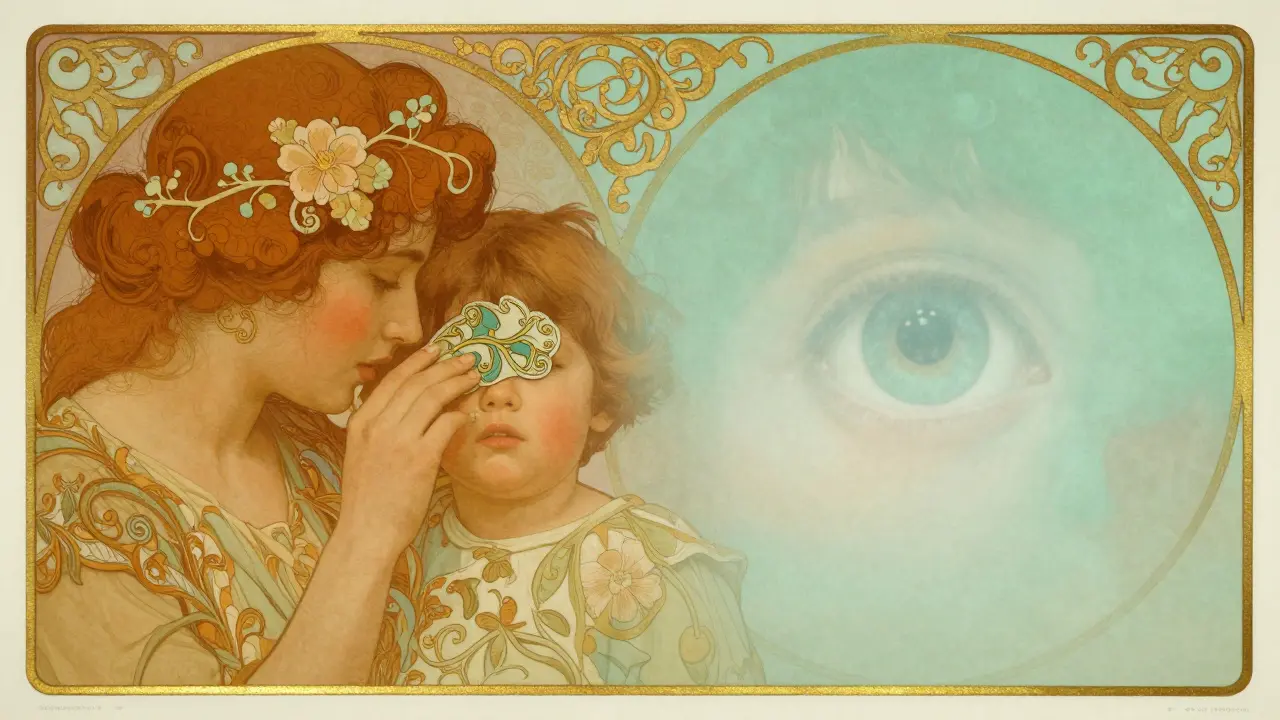
For decades, patching has been the go-to treatment. The idea is simple: cover the strong eye, force the brain to use the weak one. It sounds brutal - and sometimes it is. But the results? Powerful.Studies show that 97% of children will improve with patching. About 65-75% will reach normal or near-normal vision. But here’s what most parents don’t know: you don’t need to patch all day.
The landmark Amblyopia Treatment Study found that for moderate cases (vision between 20/40 and 20/100), just two hours of daily patching worked just as well as six. That’s a game-changer. Less time wearing a patch means less stress, fewer tantrums, and better compliance.
Doctors usually start with 2-4 hours a day, depending on severity. For severe cases, 6 hours may still be needed. But the goal is always the minimum effective dose.
What If My Child Won’t Wear the Patch?
This is the biggest hurdle. Studies show only 40-60% of kids stick with patching as prescribed. Parents report skin irritation, teasing at school, and daily battles.Successful families use smart tricks:
- Make it fun: Turn patching into a game. "Superhero hour." "Pirate time." Let kids decorate their patches with stickers.
- Use rewards: A sticker chart. Extra screen time. A small treat after a full week.
- Start slow: Begin with 30 minutes, then build up. Don’t jump into 4 hours on day one.
- Use apps: Apps like LazyEye Tracker help log hours and send reminders. About 22% of pediatric eye clinics now recommend them.
- Peer support: Some clinics run "patching parties" where kids wear patches together. It normalizes it.
Parent education makes a huge difference. When parents understand that this isn’t just about seeing better - it’s about rewiring the brain - adherence jumps from 45% to 89%.
Alternatives to Patching
Patching isn’t the only option. For kids who can’t tolerate it, doctors have other tools:- Atropine drops: One drop in the strong eye every day blurs near vision. The child then uses the lazy eye to read or play. Studies show it works just as well as patching for moderate cases. Plus, no patch means no social stigma.
- Bangerter filters: These are translucent stickers placed on the lens of glasses. They blur vision slightly without looking like a patch. Best for older kids who refuse traditional patches.
- Digital therapy: Platforms like AmblyoPlay use video games designed to stimulate the weak eye. FDA-cleared since 2021, these apps show 75% compliance rates - way higher than patching. They’re especially useful for kids who love screens.
For strabismic amblyopia, surgery to fix eye alignment may come first. But even after surgery, patching is almost always still needed. The eye might look straight - but the brain still needs to learn to use it.
How Long Does Treatment Take?
This isn’t a quick fix. Most kids need treatment for 6 to 12 months. Some need it longer. Follow-ups every 4 to 8 weeks are critical. Vision can improve quickly at first, then plateau. Adjustments are normal.Age is the biggest predictor of success:
- Before age 5: 85-90% recovery rate
- Ages 5-7: 50-60% recovery rate
- After age 8: Progress slows dramatically. Some improvement is still possible, but full recovery is rare.
That’s why waiting is dangerous. If your child passed a school vision screening but you’re still worried - get a full eye exam. Screenings miss up to 40% of amblyopia cases.
What About Older Kids and Adults?
For years, doctors said amblyopia couldn’t be treated after age 7. That’s outdated. Recent studies show adults can improve - just not as much.Experiments with perceptual learning, video games, and even transcranial random noise stimulation (tRNS) - a mild electric current applied to the brain - have shown modest gains in visual acuity. But these are still experimental. And the gains are small compared to what kids achieve.
The message is clear: treat early. Treat now. Don’t wait.
What Happens If It’s Not Treated?
Untreated amblyopia doesn’t just mean poor vision in one eye. It means permanent loss of depth perception, reduced peripheral awareness, and lifelong vulnerability. If the good eye gets injured or develops disease later in life - say, diabetes or glaucoma - the person could be functionally blind.This isn’t theoretical. It’s real. And it’s preventable.
What Parents Should Do Now
- Get your child’s first full eye exam by age 3 - not at school, not when they complain.
- If one eye seems to wander, or your child squints, tilts their head, or closes one eye to see - see an eye specialist immediately.
- If diagnosed, stick with the treatment plan. Even if it’s hard. Even if they cry.
- Ask about alternatives to patching. Don’t assume it’s the only option.
- Track progress. Keep a log. Celebrate small wins.
Amblyopia isn’t a life sentence. It’s a solvable problem - if you act fast. The brain is more flexible than we ever thought. But that flexibility fades. Time is the most valuable thing you have.
Can amblyopia fix itself without treatment?
No. Amblyopia does not fix itself. The brain learns to ignore the weaker eye, and without intervention, that suppression becomes permanent. Even if the eye looks normal, the vision won’t improve on its own.
Is patching painful or dangerous?
Patching isn’t painful, but it can cause mild skin irritation or frustration. It’s not dangerous. The only real risk is not doing it - which can lead to permanent vision loss in the affected eye.
How long should my child wear the patch each day?
For moderate amblyopia, 2 hours a day is just as effective as 6 hours, according to major clinical trials. For severe cases, doctors may recommend 4-6 hours. Always follow your eye specialist’s specific plan - not general advice.
Can my child wear glasses instead of a patch?
Glasses alone can fix amblyopia only if it’s caused by uncorrected refractive error - and even then, they’re often not enough. Most children still need patching, atropine drops, or digital therapy to retrain the brain.
Is amblyopia hereditary?
Yes. If a parent or sibling had amblyopia, a child’s risk increases by 30-40%. That’s why early screening is especially important for families with a history.
Can adults be treated for amblyopia?
Adults can see modest improvements with intensive vision therapy or new technologies like digital games or brain stimulation - but results are far less predictable and dramatic than in children. The best outcomes are always achieved when treatment starts before age 5.
How often should we see the eye doctor during treatment?
Every 4 to 8 weeks is standard. Progress is tracked with visual acuity tests. If improvement stalls, the doctor may adjust patching time, switch to atropine, or add vision therapy exercises.
Early detection saves sight. A simple eye exam at age 3 can change a child’s future - not just their vision, but their confidence, learning, and independence. Don’t wait for symptoms. Don’t assume everything’s fine because they’re not complaining. Take action now.


